

Hydrogen hubs across the country seek to fuel high-emission industries with cleaner energy.
Hydrogen is the most plentiful element in the universe, and it’s also a building block for a burgeoning clean energy industry—clean because consuming it for energy doesn’t emit any greenhouse gases. These facts alone make it a pretty attractive alternative to extracting and burning fossil fuels. But things get trickier when it comes to producing hydrogen on a large scale, and so far, the promise of so-called green hydrogen has been largely out of reach.
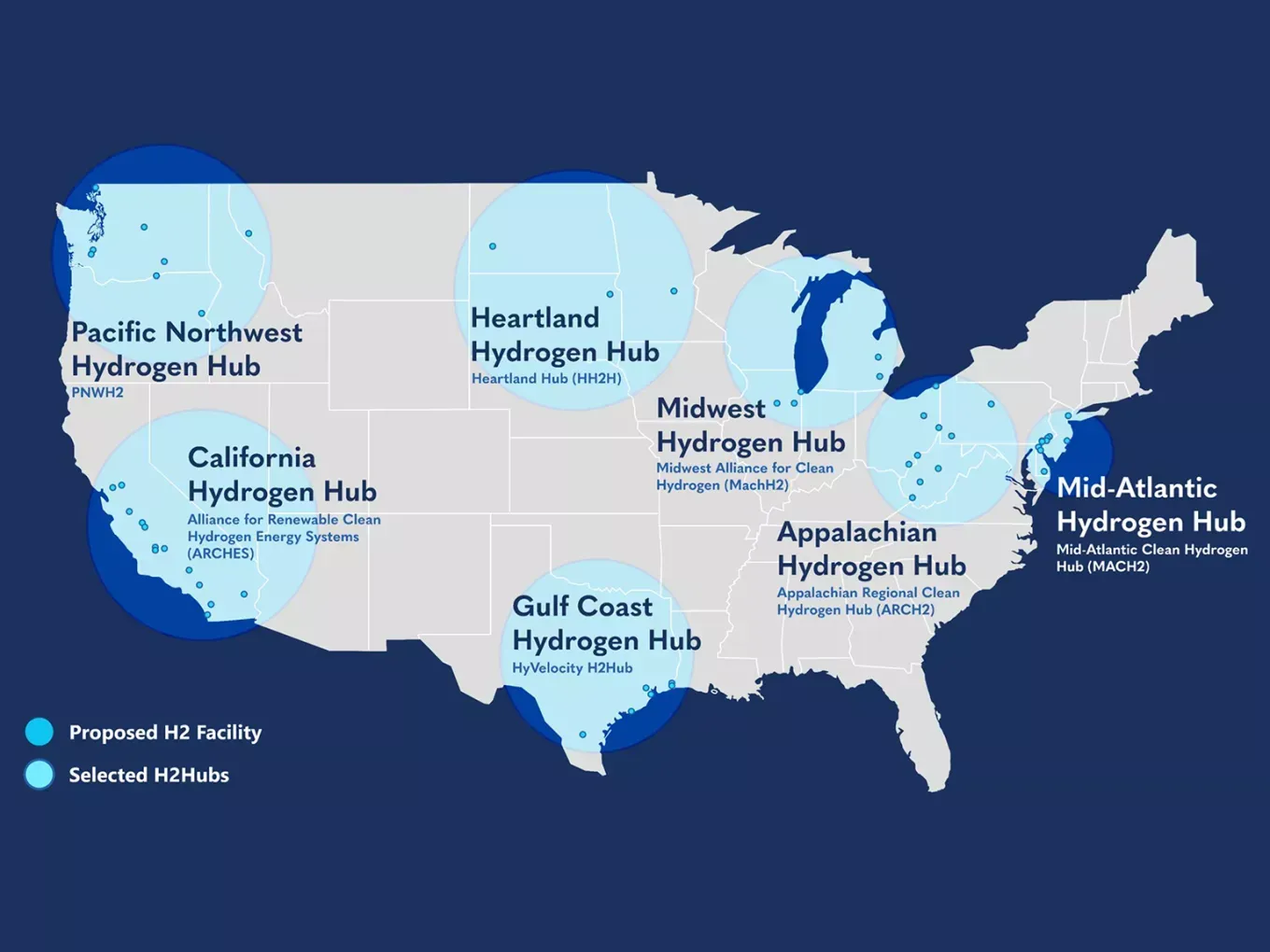
That’s why the Biden administration wants to jump-start the clean hydrogen industry by investing $7 billion in seven hydrogen hub projects scattered throughout the country. If the backers of the proposed hubs, selected by the U.S. Department of Energy (DOE), can get community buy-in, demonstrate that the facilities can, in fact, produce sufficient amounts of clean hydrogen, and then have that hydrogen power otherwise hard-to-decarbonize industries, then the hubs could potentially go a long way in helping the country reach net zero emissions by 2050.
“The hubs could be really helpful in showing us what works in terms of end uses,” says Erik Kamrath, a hydrogen advocate with NRDC. “They have the potential to help us understand how we want to scale in the future.”
How do you produce hydrogen?
Hydrogen gas occurs naturally in relatively small amounts on this planet, but the element is very abundant in compounds where it is chemically bonded with other elements. (Just think of how two hydrogen atoms and one oxygen atom form a water molecule, or H2O.) In order to use hydrogen, we must first isolate it. Breaking those bonds, however, requires a lot of energy, and so the manner in which we produce hydrogen greatly influences this resource’s overall benefit to the climate fight.
Most of the hydrogen produced today comes from a process called steam methane reforming (SMR), which is not very climate-friendly. In SMR, companies pressurize steam and methane (a fracked natural gas) with a catalyst like nickel to divide the hydrogen from the carbon, producing what’s known as “gray hydrogen.” In addition to using methane, a potent greenhouse gas, SMR also emits carbon dioxide, another greenhouse gas.
So, in an effort to figure out how to help clean up the industry, the hubs are proposing various strategies—using renewable power, nuclear power, biomass, or fossil gas—to produce hydrogen in their respective regions.
SMR with carbon capture and storage
The hubs could potentially reduce climate emissions from SMR through carbon capture and storage (CCS), a strategy that’s been dubbed “blue hydrogen.” This is what developers behind the Gulf Coast and Appalachian hydrogen hubs are planning, but currently, only a few dozen CCS facilities exist worldwide. While the United States and Europe have been ramping up funding for CCS projects, progress has so far been slow, due in part to its high cost and the uncertainty around its long-term feasibility.
Electrolysis via grid energy
Another way to produce hydrogen is by using electricity to split a water molecule into hydrogen and oxygen. Called electrolysis, this process occurs in a unit called an electrolyzer that can connect with the grid. Like SMR, electrolysis requires a lot of energy, but unlike SMR, the process itself results in no greenhouse gas emissions. However, when powered by the current grid, where the electricity is still predominantly generated by fossil fuels, electrolysis can end up emitting twice as much climate pollution as SMR.
Electrolysis via renewable energy
This is the same electrolysis process but fueled by renewable power. Because this option neither requires fossil fuels nor results in climate emissions, it’s called “green hydrogen.” (When using nuclear power, it’s called “pink hydrogen.”) While the technology is still in the early stages, falling renewable energy prices, along with the decreasing costs of the electrolyzers themselves and the clean hydrogen tax credit within the Inflation Reduction Act (IRA), could make this type of electrolysis cost competitive with other methods.
The best uses of hydrogen to cut climate emissions
Because producing any type of hydrogen requires so much energy, experts say that the best end uses of hydrogen would be in hard-to-decarbonize industries, or where few other, more efficient clean alternatives exist. Such practical applications include steelmaking, cement making, fertilizer production, long-haul trucking, and potentially, the production of jet fuel.
“Hydrogen is appealing because it has a bunch of potential uses if you can make it cheap enough,” says Wilson Ricks, an engineer in Princeton University’s Zero-Carbon Energy Systems Research and Optimization (ZERO) Laboratory. “It could fill in, if we fail to have any other option.” On the flip side, using hydrogen energy to fuel cars or heat buildings wouldn’t be as efficient, since wind or solar power can already do this without needing that extra energy to produce hydrogen in the first place.
How is the government supporting the hydrogen industry?
The Bipartisan Infrastructure Law provides funding for the hydrogen hubs and shares the costs of them with coalitions of energy companies, nonprofit and for-profit companies, and state and local governments. Demonstrating what types of facilities might work best, especially in certain geographic regions, is one of the first steps to developing the hydrogen industry at a commercial scale.
“Hydrogen overall has been given just about the best set of conditions that emerging technology could possibly have,” says Ricks. “I'd say it's maybe the most favored clean energy technology in terms of its U.S. policy support right now.”
The IRA also provides a tax credit based on the amount of hydrogen produced, representing one of the biggest subsidies in the law. Importantly, for companies to receive the tax credit, the process of making the hydrogen must result in low greenhouse gas emissions.
What does a successful hydrogen hub look like?
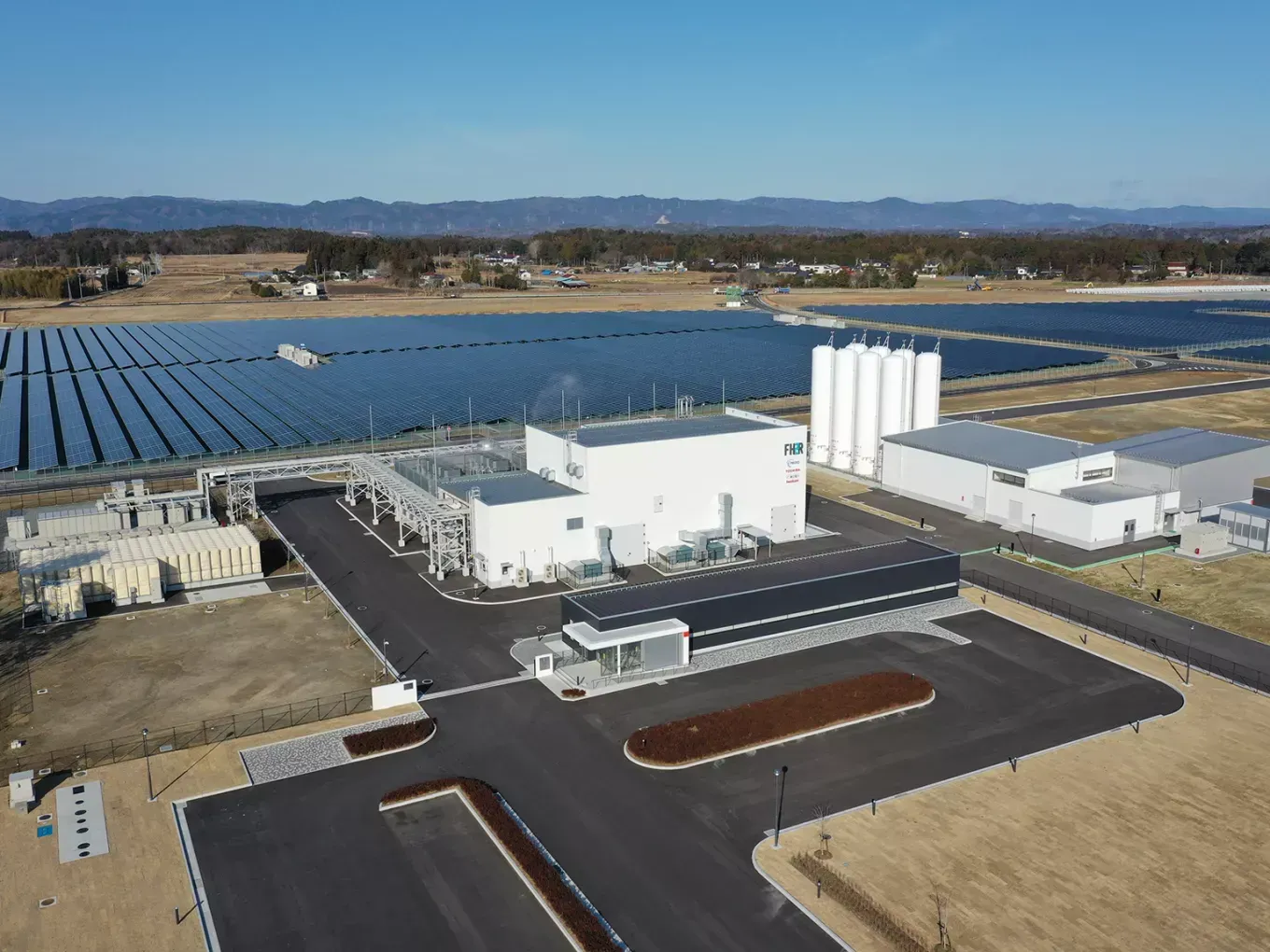
A study published last year by Ricks and his colleagues in Environmental Research Letters outlined three things a green hydrogen facility needs to score well on to optimize its carbon-slashing potential: deliverability, additionality, and hourly matching. Deliverability is a measure of how easily the renewable electricity can get from where it’s generated to where it’s consumed to produce hydrogen. Additionality is making sure the energy sources consumed in the production of hydrogen aren’t already relied on for other purposes. In other words, you wouldn’t want a hydrogen hub to hog an energy source that’s already providing power to, say, buildings, which would run the risk of raising electricity prices and emissions. And finally, hourly matching is the ability to consume the energy as it’s being generated. To ensure constant supply, hydrogen can be stored as a gas in geologic formations like salt caverns, or as a liquid and transported in supercooled tanks.
A successful hub would also not threaten the health and well-being of those living nearby. For each phase of a hub project, the DOE requires a community benefit plan—which may include air quality improvements, job prospects, training opportunities, or funding avenues for disadvantaged communities—with further government support being contingent on the hub meeting those goals. Still, a number of communities, such as those in Indiana where developers are planning many carbon storage pipelines, have been expressing concerns over a lack of transparency surrounding the proposals.
This is particularly the case for hubs that involve fossil fuels in some capacity. Hubs that use natural gas in their production process, for example, could add to local air pollution levels. Burning hydrogen also results in emissions of nitrogen oxides, which can irritate peoples’ airways and contribute to smog. While there are ways to scrub nitrogen oxide pollution from the emissions, as of now, whether or not the government will require them is unclear. When the department will make its next approvals for the hub proposals is also unknown.
“The public needs a road map of how these projects will unfold and where and when they could have opportunities to voice concerns and take part in the decision-making,” says Batoul Al-Sadi, an equity advocate at NRDC. That, she says, would “allow communities to provide input and be active participants in the process.”
What’s known at this point is that the government plans to finalize its conditions for receiving the hydrogen production tax credit later this year, and it will require more detailed information from the hubs before allowing them to break ground. And then there’s the other looming deadline, the one set by climate change. Commercial output from these hubs is expected no later than 2035.
Proposed Hydrogen Hubs
The seven hubs are aiming to produce green hydrogen, blue hydrogen, or a mix of both.
| Name | Location | Hydrogen Production Method | Type of Energy to Be Used | Proposed End Purposes |
|---|---|---|---|---|
| Appalachian Hub | WV, OH, PA | SMR with Carbon Capture | Fossil Gas | Trucking, Transit, Other Industry |
| California Hub | CA | Electrolysis | Renewable Energy & Biomass | Trucking, Transit, Ports, Power Generation |
| Gulf Coast Hub | TX | Electolysis & SMR with Carbon Capture | Renewable Energy & Fossil Gas | Trucking, Transit, Fertilizer, Refineries, Chemicals, Marine Fuel, Other Industry |
| Heartland Hub | MN, ND, SD | Electolysis & SMR with Carbon Capture | Renewable Energy, Biomass & Fossil Gas | Fertilizer, Power Generation, Heating |
| Mid-Atlantic Hub | PA, NJ, DE | Electrolysis | Renewable Energy & Nuclear | Trucking, Transit, Heating |
| Midwest Hub | IL, IN, MI | Electolysis & SMR with Carbon Capture | Renewable Energy, Nuclear & Fossil Gas | Steelmaking, Trucking, Transit, Aviation, Power Generation, Other Industry |
| Pacific Northwest Hub | WA, OR, MT | Electrolysis | Renewable Energy | Trucking, Transit, Aviation, Ports, Fertilizer, Power Generation, Refineries, Chemicals, Data Centers, Other Industry |