

Due to its unique properties, helium coolant in nuclear reactors will be essential in fuelling the green energy transition.
Critical Raw Materials |
26th July 2023
Nuclear reactors, whether used for research or power production, are complex systems that require careful management of heat and radiation. In this intricate process, helium gas plays an indispensable role.
Characterized by its unique physical and chemical properties, such as low neutron absorption and high thermal conductivity, helium has been proven to significantly enhance the performance of nuclear reactors when utilized as a coolant.
The use of helium coolant in nuclear reactors not only aids in efficient heat transfer but also bolsters the safety measures in place within these high-energy environments.
However, while the benefits of using helium coolant in nuclear reactors have been well-established, there remain challenges related to its supply and utilization within the industry.
Addressing these issues is crucial for maintaining operational efficiency and ensuring long-term sustainability in energy production.
This article aims to delve into the science behind helium’s application in nuclear reactors – including its role as a coolant, its contribution towards safety measures, and how it can be harnessed more effectively in future applications.
Understanding the importance of reactor coolants
In the complex ecosystem of nuclear reactors, coolants such as helium play a pivotal role in maintaining optimal temperatures, ensuring safety and efficiency in energy production.
Their function is critical to facilitating heat transfer mechanisms from the reactor core to the steam generators.
With its high thermal conductivity and low boiling point, helium fulfills this role effectively by absorbing excess heat produced during nuclear fission reactions.
The choice of helium coolant is driven by several selection criteria, including its ability to withstand high temperatures without decomposing or reacting with other elements within the reactor.

The significance of pressure regulation cannot be understated in this context either. In a closed-loop system like a nuclear power plant, pressure contributes significantly to overall reactor efficiency.
Helium’s low density allows it to exhibit superior performance under high pressures and temperatures, unlike heavier gases that might suffer molecular breakdown under similar conditions.
This attribute not only bolsters helium’s position as an effective coolant but also enhances its compatibility with various types of reactor designs.
A comprehensive understanding of these factors underscores why helium is often chosen as a coolant in many modern nuclear applications – particularly gas-cooled reactors, where its integrity and stability at elevated temperatures are highly beneficial.
Its impressive thermal conductivity properties facilitate efficient energy conversion processes through robust heat transfer mechanisms.
As scientists continue exploring innovative ways to optimize nuclear technology for energy generation, it becomes increasingly apparent that helium coolant in nuclear reactors will remain indispensable.
Unique properties of helium
As a noble gas, this element possesses properties that underscore the adage ‘not all that glitters is gold,’ illustrating its crucial yet understated significance in energy production systems.
Helium has many distinct characteristics contributing to its wide range of applications in various fields, including nuclear technology.
It boasts a high level of stability due to its full electron shell configuration, making it unreactive under normal conditions, and thus an ideal candidate for use in sensitive environments where chemical reactions could pose significant risks.
Moreover, the behavior of helium at different temperatures and pressures contributes to its versatility.
The abundance of helium on Earth further reinforces its practicality for industrial usage; it is found both in natural gas reserves and as a byproduct of radioactive decay within the Earth’s crust.
Its low boiling point makes it useful for cryogenic applications such as cooling superconducting magnets in MRI scanners or maintaining extremely low temperatures in particle physics experiments.
The thermal conductivity of helium is also higher than any other gas, which signifies efficient heat transfer – an important feature when dealing with reactors or turbines.
These combined attributes make helium an essential component in nuclear reactors, particularly as a coolant.
The effectiveness lies in the ability to absorb large amounts of heat and its inert nature, preventing unwanted chemical reactions during operation.
Thus, despite being less conspicuous compared to heavier elements like uranium or plutonium used directly as fuel, helium’s role should not be underestimated given its properties contributing significantly toward safe and efficient energy production systems.
Use in heat transfer and cooling
Utilizing its high thermal conductivity and low boiling point, this helium is an efficient coolant in various technological applications, providing optimal temperature regulation in sensitive devices like superconducting magnets and particle accelerators.
In the context of nuclear reactors, helium’s effectiveness as a coolant is unparalleled due to its unique physical properties. Its role in maintaining reactor temperature is crucial for preventing overheating and subsequent potential damage to reactor components.
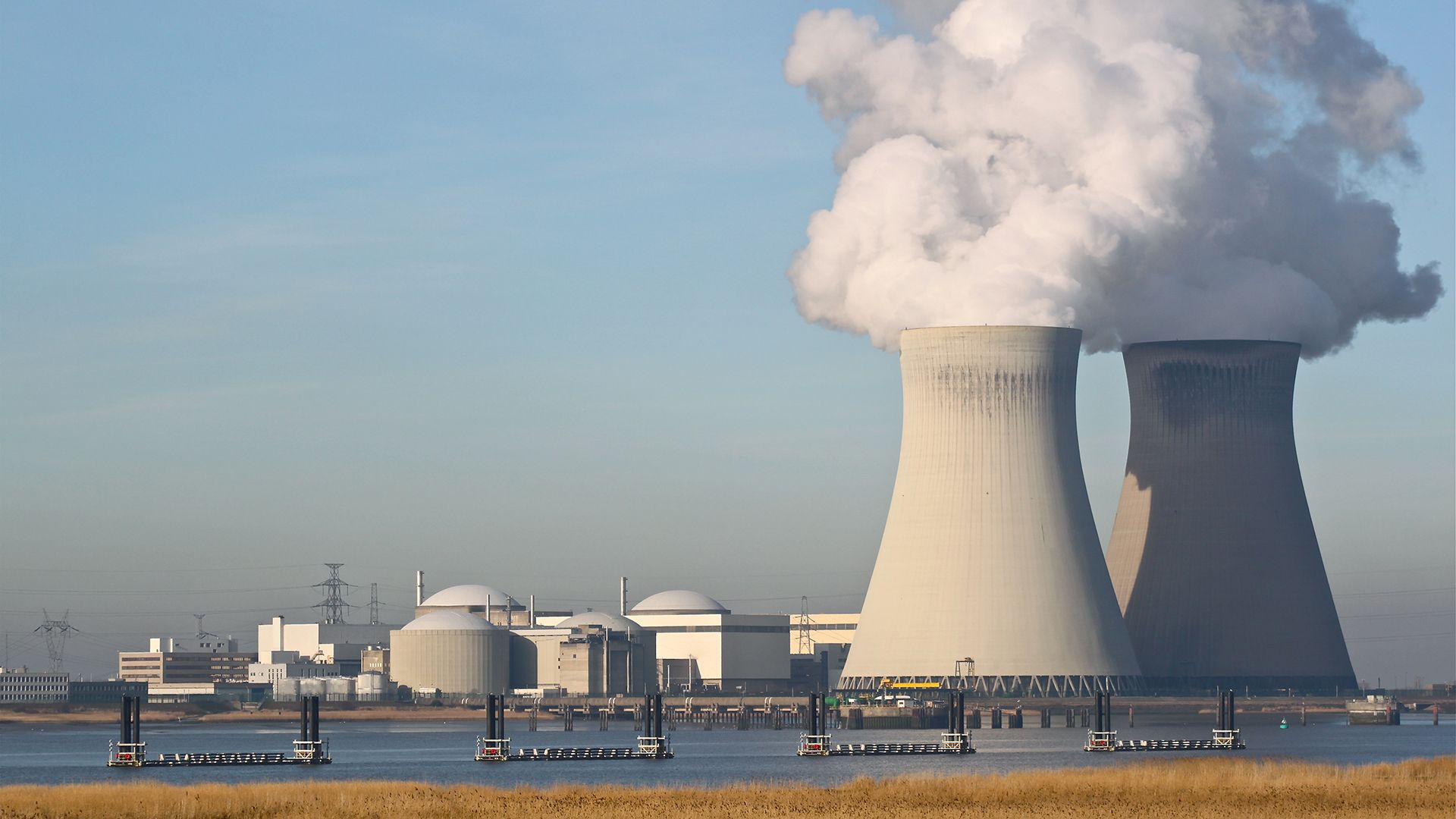
Helium’s contribution to overall reactor efficiency can be further broken down into two primary areas: Heat Transfer and cooling.
Helium facilitates heat transfer from the core of the reactor to other parts. This assists in the control of temperature within a nuclear power plant, thereby enhancing safety measures.
Applications of helium in heat transfer include both fission-based nuclear power plants and experimental fusion devices. Owing to its inert nature, helium does not interact with materials within these systems hence reducing corrosion risks.
The advantages of using helium for cooling purposes are manifold. Firstly, it has a large specific heat capacity, allowing it to absorb significant amounts of heat without undergoing substantial temperature changes.
Secondly, being chemically inert and non-radioactive makes helium coolant in nuclear reactors a reliable and efficient method that does not pose any contamination risk.
The application of helium goes beyond just acting as an effective coolant; it also plays an integral part in ensuring operational stability within nuclear reactors.
Ensuring reactor safety and efficiency
Helium’s low neutron absorption cross-section, chemical inertness, and high boiling point make it ideal for maintaining optimal operational conditions within reactors while conforming to stringent regulatory standards.
Managing waste products from nuclear reaction processes is another area where helium’s properties play a pivotal role.
Helium does not become radioactive upon exposure to neutron radiation, unlike other possible coolant candidates such as water or carbon dioxide.
This attribute minimizes the generation of secondary radioactive waste materials during operation, which simplifies waste management protocols and reduces potential hazards associated with storage and disposal processes.
Maintenance procedures within nuclear facilities also benefit from helium’s attributes. Its non-corrosive nature lessens the wear on reactor components, prolonging their service life and reducing downtime for repairs.

Moreover, using helium as a cooling medium during emergency response scenarios can prevent catastrophic overheating situations thanks to its excellent thermal conductivity.
Hence, incorporating helium into reactor systems markedly enhances safety measures whilst improving overall performance efficiency without compromising adherence to regulatory norms or posing significant challenges in waste management or system maintenance.
Future prospects for sustainable energy production
In sustainable energy production, exploring advanced technological methods and alternative resources is imperative for future development.
Helium plays a pivotal role in hydrogen fusion – an innovative approach towards renewable energy that could meet global energy demand with minimal environmental impact.
Moreover, the employment of helium coolant in nuclear reactors could facilitate the transition from fossil fuels to more sustainable sources of energy.
Given its abundance and non-toxic nature, helium presents less risk than other coolant alternatives, such as sodium or lead.
Its superior heat transfer capability enhances reactor performance and safety while reducing greenhouse gas emissions associated with conventional nuclear power plants.
Helium’s contribution to achieving higher efficiency rates strengthens its position as a cornerstone for modernized and environmentally responsible nuclear power generation.
Shifting towards advanced technological solutions powered by helium can significantly reshape the landscape of global energy production, paving the way for sustainable growth without compromising on meeting escalating worldwide energy demands.