

The mainstay material of electronics is now yielding better energy storage
By PRACHI PATEL| | 04 MAY 2023
Since lithium-ion batteries’ commercial debut three decades ago, this portable and high-density (and Nobel Prize–winning) energy storage technology has revolutionized the fields of consumer electronics, electric vehicles, and large-scale energy storage. And yet even for the technology’s vast advancements—a staggering thirtyfold drop in price between 1991 and 2018, for instance—the biggest improvements have taken place mostly on the lithium-metal-oxide cathode side. Lithium-ion batteries’ graphite anodes, by contrast, have largely stayed the same.
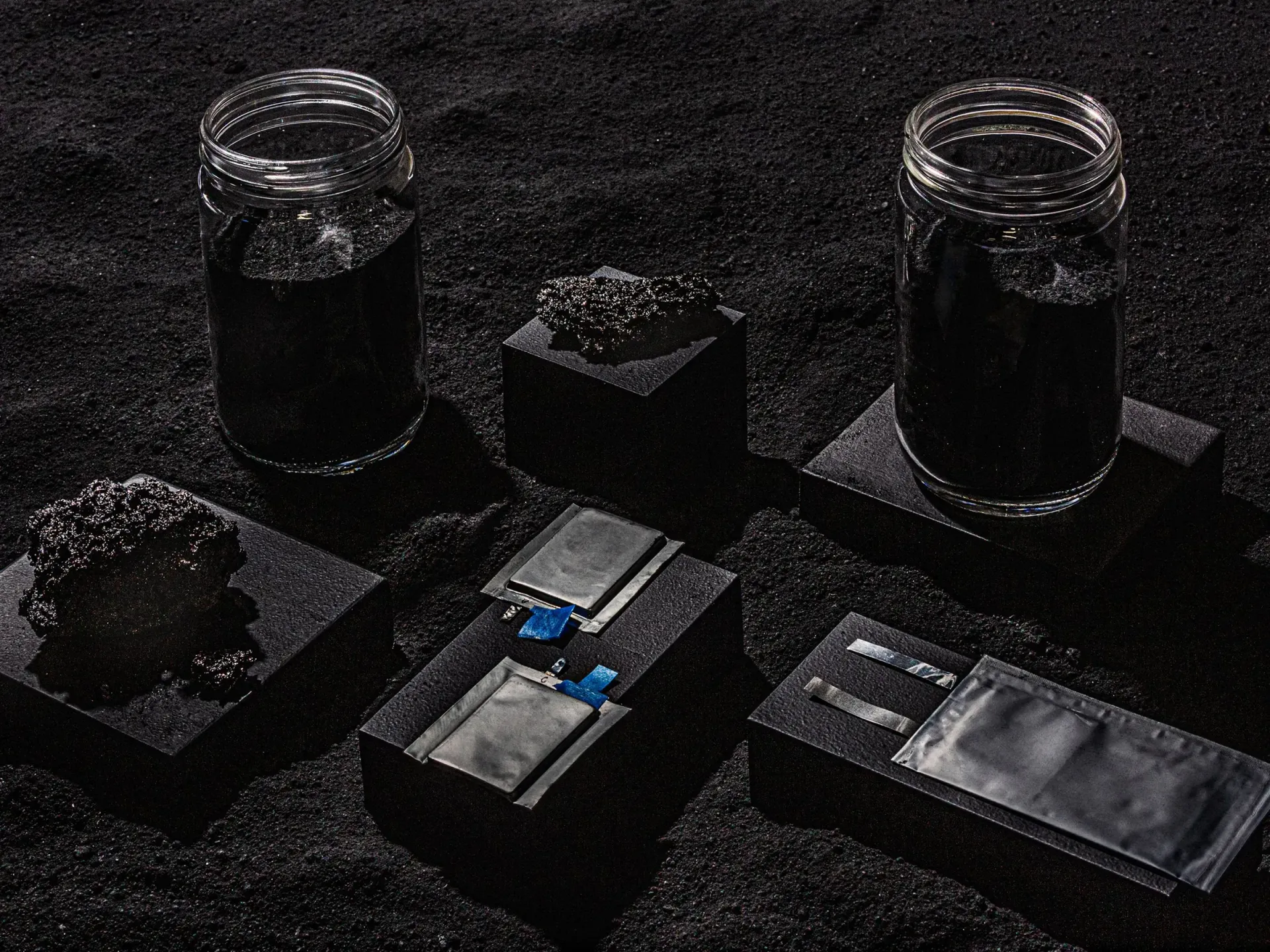
Silicon has long held out promise as a medium for anodes, because it can hold 10 times as many lithium ions by weight as graphite. In fact, silicon’s first documented use as a lithium battery anode even predates that of graphite—by seven years. But experiments with that element have been plagued by technical challenges—including volume expansion of the anode when loaded with lithium ions and the resulting material fracture that can happen when an anode expands and contracts.
Now, however, after some 15 years of incremental improvements and dashed hopes, silicon’s time as a mainstay material in batteries has finally arrived.
“Silicon has transformed the way we store information, and now it’s transforming the way we store energy.”
–Rick Costantino, Group14
Some carmakers and silicon anode startups have teamed up to produce longer-range, lower-cost EVs that could be on the road by mid-decade. General Motors and OneD Battery Sciences in Palo Alto, Calif., are putting OneD’s silicon nanotechnology into GM’s Ultium battery cells. Alameda, Calif.–based Sila Nanotechnologies’ silicon anode, which has powered the Whoop fitness tracker since 2021, will be in the Mercedes G-Class SUV by 2026. Group14 Technologies, in Woodinville, Wash., should have its silicon battery setup in a Porsche EV by next year.
In late 2022, Group14, Sila, and Amprius Technologies in Fremont, Calif., raised nearly half a billion dollars to commercialize their anode materials, with US $250 million from the U.S. Department of Energy and, for Group14, another $214 million in private investment. All three plan to have domestic gigawatt-scale factories up and running in the next few years. Group14 began construction of a 20-gigawatt plant in Moses Lake, Wash., in April.
“Silicon has transformed the way we store information, and now it’s transforming the way we store energy,” says Group14’s chief technology officer, Rick Costantino.
Silicon promises longer-range, faster-charging and more-affordable EVs than those whose batteries feature today’s graphite anodes. It not only soaks up more lithium ions, it also shuttles them across the battery’s membrane faster. And as the most abundant metal in Earth’s crust, it should be cheaper and less susceptible to supply-chain issues. As things stand, nearly all graphite anode material is processed in China.
Tesla has reportedly added up to 5 percent silicon in its batteries’ anodes. But silicon anode startups want to go much further.
When researchers first began to explore silicon for lithium battery anodes—as noted above, in 1976, before graphite became the compromise solution—silicon’s drastic swelling and shrinking during charge and discharge quickly disintegrated the anode. And adverse side reactions complicated the process during charging and shortened battery life as well.
Some commercial battery makers, including Tesla, have boosted the lithium-holding capacity of their batteries’ anodes by adding a small amount (usually up to 5 percent) of silicon. But silicon anode startups want to go much further.
Most of them are looking at nano-engineered silicon as a workaround to the swelling and side-reaction problems. Stanford materials science professor Yi Cui and his lab set off this field of research with a 2008 paper in Nature Nanotechnology on silicon nanowires that withstood swelling. Others soon put different spins on this, with spherical silicon nanoparticles, core-shell-type particles made up of silicon cores with protective coatings around them, and silicon particles with etched surfaces.
Cui cofounded Amprius in 2008 to commercialize the silicon nanowire anode technology. The company has improved the process to grow nanowires directly from the metal current collector substrate. The nanowires do not swell as much as spherical nanoparticles. The company’s choice of pure silicon is the reason for the battery’s high energy density, says Ionel Stefan, chief technology officer. The thin, porous materials also allow a depleted battery to be brought to a 90 percent state of charge in 10 minutes.
In March, Amprius reported a silicon anode battery with a record-high certified energy density of 500 watt-hours per kilogram, about twice that of today’s EV batteries. Airbus and BAE Systems already use the company’s batteries in aircraft. By ramping up production at a 5-GW factory in Boulder, Colo., that will open in 2025, Amprius hopes to bring down costs enough for commercial flight applications such as drones and air taxis.
The downside to Amprius’s anode technology is that “it’s expensive and its production requires proprietary anodes not compatible with existing large EV cell factories,” says Vincent Pluvinage, CEO and cofounder of OneD Battery Sciences. That’s the reason Amprius is, for now, targeting niche applications like urban air transport.
Pluvinage says OneD is instead focused on getting affordable EVs on the market by 2026. OneD also uses silicon nanowires, but the company infuses the nanowires into the internal pores and surfaces of graphite particles. The addition of silicon processing costs less than $2 per kilowatt-hour, and produces batteries with energy densities of 350 watt-hours per kilogram and 80 percent charging in under 10 minutes. “While silicon has been seen as a highly engineered and expensive material, OneD has found the solution for breaking this cost barrier and effectively adding just the right amount of silicon into EV batteries,” Pluvinage says.
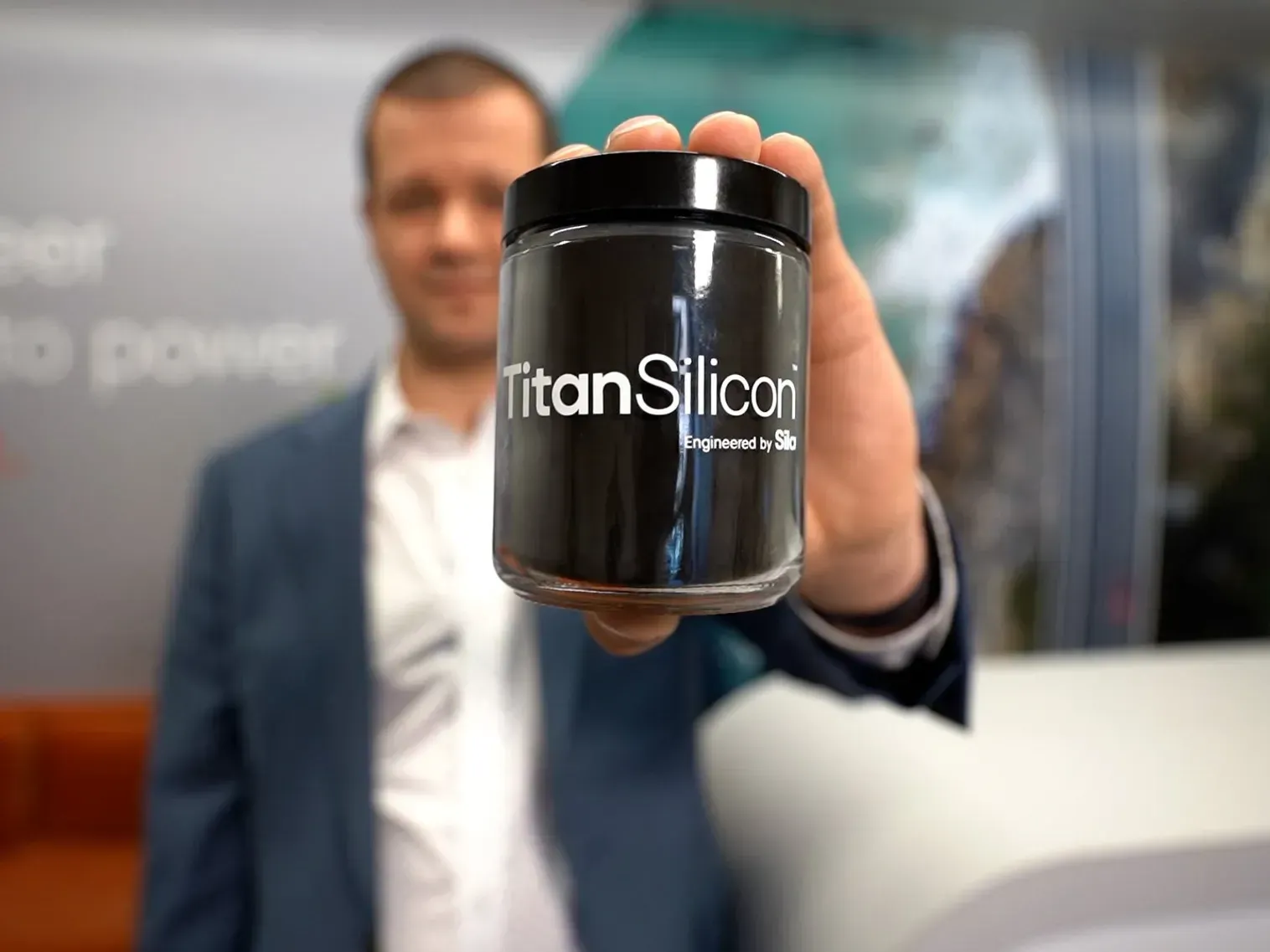
Group14 and Sila are both keeping costs low by designing silicon materials that look and behave just like the black graphite powder used to make today’s anodes. This, they say, will allow a drop-in swap at existing battery facilities. “You don’t need to change the way batteries are made…silicon anodes can be made in the same factories,” says Gleb Yushin, Sila’s chief technology officer. Yushin, a materials science professor at Georgia Tech, cofounded Sila in 2011 with ex-Tesla engineer Gene Berdichevsky.
Sila’s silicon powder consists of micrometer-size particles of nanostructured silicon and other materials surrounded by a porous scaffold made of another material. The material enables batteries with 20 percent higher energy density (which translates to about 160 kilometers more range for an EV) than those with graphite anodes. The company says it plans to double that in the future.
“At the material level, it should eventually be cheaper than graphite.”
—Gleb Yushin, Sila Nanotechnologies
Sila’s composite combats both key issues with silicon, namely swelling and reactions with the electrolyte. The spaces in the nanostructured, porous material allow silicon to expand without damage; and the scaffolding allows lithium ions through while preventing reactions with the electrolyte, Yushin explains.
Sila currently makes its anode material at a pilot-scale facility in California, and plans to build a 20-GW plant in Washington state. That facility, the company says, will turn out enough anode material to power 1 million EVs within the next five years. “We founded the company to enable the EV revolution,” Yushin says. “When you increase scale, the cost always goes down substantially. At the material level, it should eventually be cheaper than graphite.”
Group14 is tapping into its expertise in making porous carbon materials for batteries and ultracapacitors. The company creates micrometer-size porous carbon particles in a single step and single reaction using a patented process, and then uses chemical vapor deposition to get silicon inside the pores. The silicon that forms inside is amorphous, not crystalline, unlike that used by competitors, says CTO Costantino. “Amorphous silicon is the ideal form for energy storage. It’s the most stable form, with high capacity and greater cycle life.”
The company’s 10-GW plant in South Korea, built in partnership with SK Materials, a leading manufacturer of materials for electronics and displays, should be on line in the coming months, Costantino says. The firm’s 20-GW factory will come on line by next year. Unlike Sila, Group14 is looking at transport applications beyond EVs, including air taxis and eVTOLs.
Nanostructured silicon might not be the only way to put silicon in anodes. Enevate, in Irvine, Calif., has taken a completely different approach. Instead of engineering silicon nanoparticles and nanowires, the company deposits porous silicon films that are tens of micrometers thick directly on copper foil. Its silicon anode batteries are now in Calif.-based Lightning Motorcycles’ new electric bikes, providing roughly 220 kilometers of EV range with just a 10-minute charge.
Meanwhile, NanoGraf has chosen another way to increase the amount of silicon in graphite anodes. The Chicago startup makes a silicon oxide material that it preswells to make it more stable. Its anodes boost the energy density of batteries by 10 percent, and the company is currently making lighter battery packs that soldiers can carry to power their communications devices, goggles, and other equipment.
As all these companies vie to increase production and lower cost, they will also have to face competition from developers of other battery chemistries that are in the running to advance lithium-ion. Lithium-metal, lithium-air, and lithium-sulfur are just a few. At Stanford, Cui is himself working extensively on lithium-metal batteries that use pure lithium as the anode. “I call it the the holy grail for batteries,” he says. His group, and others such as the U.S. Battery500 Consortium—a group of four national laboratories and five universities—have made tremendous progress on lithium metal anodes, but they still carry a safety risk, with batteries sometimes catching fire, Cui says. Besides, lithium-metal and other technologies will require redesigning a battery from scratch.
“Lithium won’t be on the market for at least another five years,” he says, but you can already place an order for silicon anode material. “Silicon is happening now. This is silicon’s era.”
© Copyright 2023 IEEE